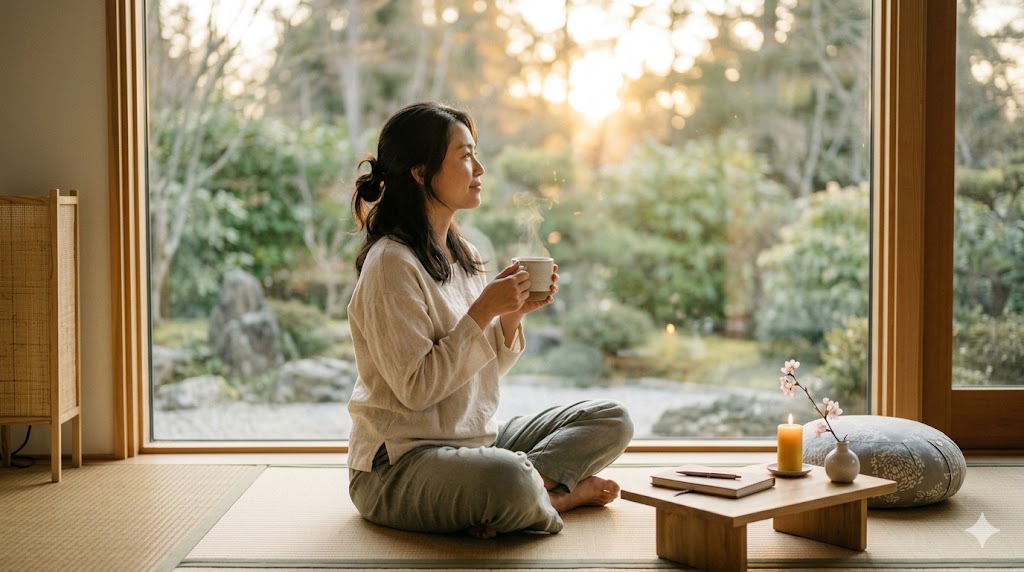
“If you are tired of waking up in a state of chaotic stress, discovering how to design a healing daily routine and rituals can be the single most powerful way to reclaim your peace and restore your body’s natural rhythm.“
Do you ever wake up feeling as though you are already late for your own life? In our fast-paced modern world, it is incredibly easy to fall out of sync with ourselves, allowing the urgent demands of the outside world to dictate our inner state before we have even swung our feet out of bed.
Creating a healing daily routine and rituals is not just about building a rigid to-do list; it is about establishing a foundational anchor for your soul. A well-crafted morning routine gives you anchoring, a true sense of purpose, and a deeper meaning to your life. By intentionally shaping the first hour of your day, you construct a sanctuary of consistency that protects your physical and mental health from the chaotic friction of modern living.
1. The Biology of Consistency: Circadian Rhythm and Your Nervous System
At a purely biological level, your body craves predictability. Every cell in your human frame operates on a 24-hour internal clock known as the circadian rhythm. When your daily habits are scattered—waking up at 6:00 AM one day and noon the next—your body enters a state of chronic circadian misalignment.
[ Irregular Routines ] ──> Elevated Cortisol ──> Nervous System Overdrive (Fight-or-Flight)
                                                                │
[ Healing Rituals ]   ──> Aligned Circadian Rhythm ──> Parasympathetic Activation (Rest & Repair)
By introducing a structured morning routine, you align your body beautifully with the natural cycles of light and dark. This alignment acts as a direct stabilizer for your nervous system. Consistency gives you calmness, a sense of structural safety, and an authentic sense of achievement before the day’s tasks truly begin.
When you anchor your morning, you shift your brain from a sympathetic “fight-or-flight” state into a parasympathetic “rest-and-repair” mode. This gentle transition actively lowers systemic inflammation, manages cortisol spikes, and shields you from common lifestyle problems like chronic fatigue, burnout, digestive issues, and anxiety.
5 Morning Habits That Change Your Life | Simple Daily Routine for Better Mental Health
2. Navigating Monotony with Mindful Awareness
A common objection to daily routines is the fear of boredom. It is true: at times, a routine can feel entirely monotonous. However, those repetitive days are actually hidden opportunities for profound spiritual growth.
When the external steps of your routine feel repetitive, you can lean into mindful awareness. Use those days to listen closely to your mind and body, and gently adjust to do what feels genuinely good in that exact moment.
Monotony is not a prison; it is a blank canvas. When you don’t have to waste mental energy deciding what to do next, your brain frees up cognitive space. You can redirect that energy inward, transforming a standard habit into a rich, restorative ritual.
3. Integrating Wisdom: Japanese Concepts for a Balanced Morning
To elevate your healing daily routine and rituals beyond mere time management, we can look to the time-tested wisdom of Japanese philosophies. These concepts elegantly bridge the gap between structure and soul, ensuring your morning remains vibrant rather than restrictive:
Finding Your Ikigai (Reason for Being)
Ikigai represents the sweet spot where your passion, mission, vocation, and profession intersect—it is essentially your reason for waking up in the morning. A morning routine shouldn’t just prepare you for work; it should honor your Ikigai. Dedicating even ten minutes of your morning to something that brings you raw joy or serves your deeper purpose gives your day an unmistakable sense of meaning.
If you haven’t read ikigai you have all the reason to grab this book now on Amazon
Cultivating Ma (The Beauty of Negative Space)
In Western culture, productivity is often measured by how tightly packed a schedule is. The Japanese concept of Ma, however, celebrates the intentional pauses, gaps, and structural silences between actions. When building your morning, leave intentional empty pockets of time. Do not rush immediately from your shower to your laptop. Give yourself five minutes to simply sit, look out the window, hold a warm mug with both hands, and exist in the stillness.
Practicing Kaizen (Gentle, Continuous Growth)
If you try to completely overhaul your life by implementing a strict two-hour morning routine tomorrow, you will likely abandon it within a week. Kaizen teaches the beauty of small, incremental, and continuous improvements. Start by changing just one tiny thing. Wake up ten minutes earlier, drink a glass of warm water before reaching for your phone, or step outside for a brief breath of fresh air. These microscopic adjustments build momentum organically, resulting in monumental, lasting health benefits over time.
4. Practical Rituals to Anchor Your Morning
Here is how you can weave these biological needs and cultural philosophies into tangible, somatic morning practices:
| Japanese Practice | Modern Application | Nervous System Benefit |
| Sayu (The Ritual Water) | Drink a comforting mug of warm water before consuming any caffeine or looking at a digital screen. | Wakes up the digestive tract gently and hydrates organs without triggering an adrenaline spike. |
| Osoji (Mindful Tidying) | Spend five quick minutes smoothing your bed sheets, washing last night’s coffee mug, or clearing off your desk. | Decreases external chaos, lowering environmental stress and reducing your overall cognitive load. |
| Asa Taiso (Morning Movement) | Engage in a brief, gentle stretching session or traditional light calisthenics to awaken muscles. | Lubricates the joints, stretches the spine out of its slouched sleep state, and smoothly raises your heart rate. |
5. Embracing Imperfection and Flexibility
As you embark on this journey of creating a healing daily routine and rituals, remember that rigidity is the enemy of a resilient nervous system. Life is unpredictable; there will be mornings when a child wakes up sick, an early flight must be caught, or you simply feel completely exhausted.
On these chaotic days, remind yourself that a ritual is defined by your internal presence, not by a perfect execution of steps. If you only have two minutes to spare, practicing a slow, mindful breath while watching your tea steep is just as powerful as an hour-long meditation session. Treat your routine with kindness, and remember that you are building a lifestyle meant to sustain you over decades, not a performance to be graded.
Conclusion: Step Into Your Rhythm
Your morning is the doorway to your entire day. By prioritizing a healing daily lifestyle & habits, you are choosing to step out of reactive emergency mode and walk gracefully into an intentional, self-authored life.
Listen to your body, lean heavily into consistency, give yourself permission to move slowly, and allow your natural internal rhythms to realign beautifully. Your health, your long-term longevity, and your inner peace will flourish because of it.
Related: Why Japanese People Don’t Feel Lonely and Embrace Minimalist Living