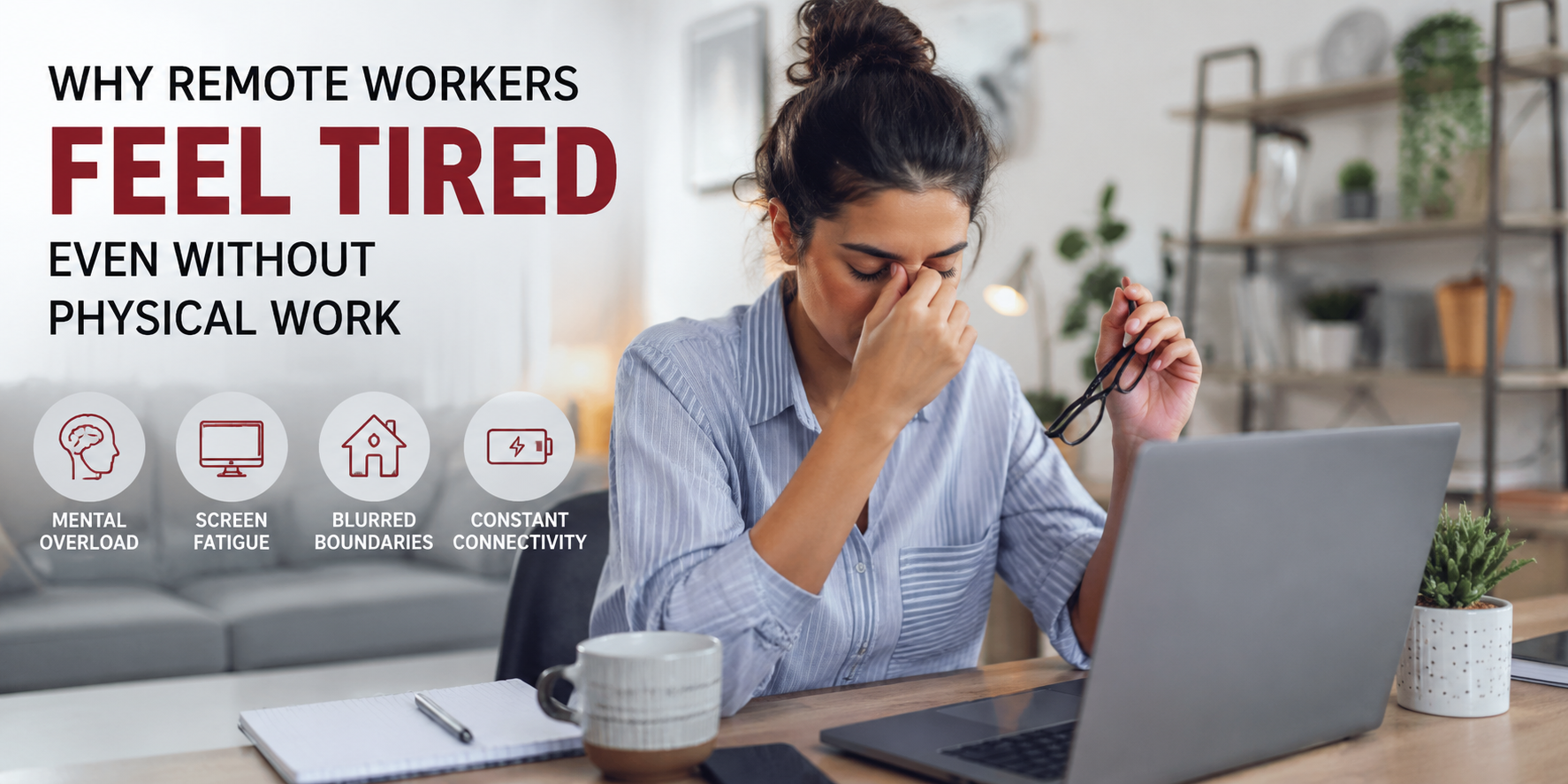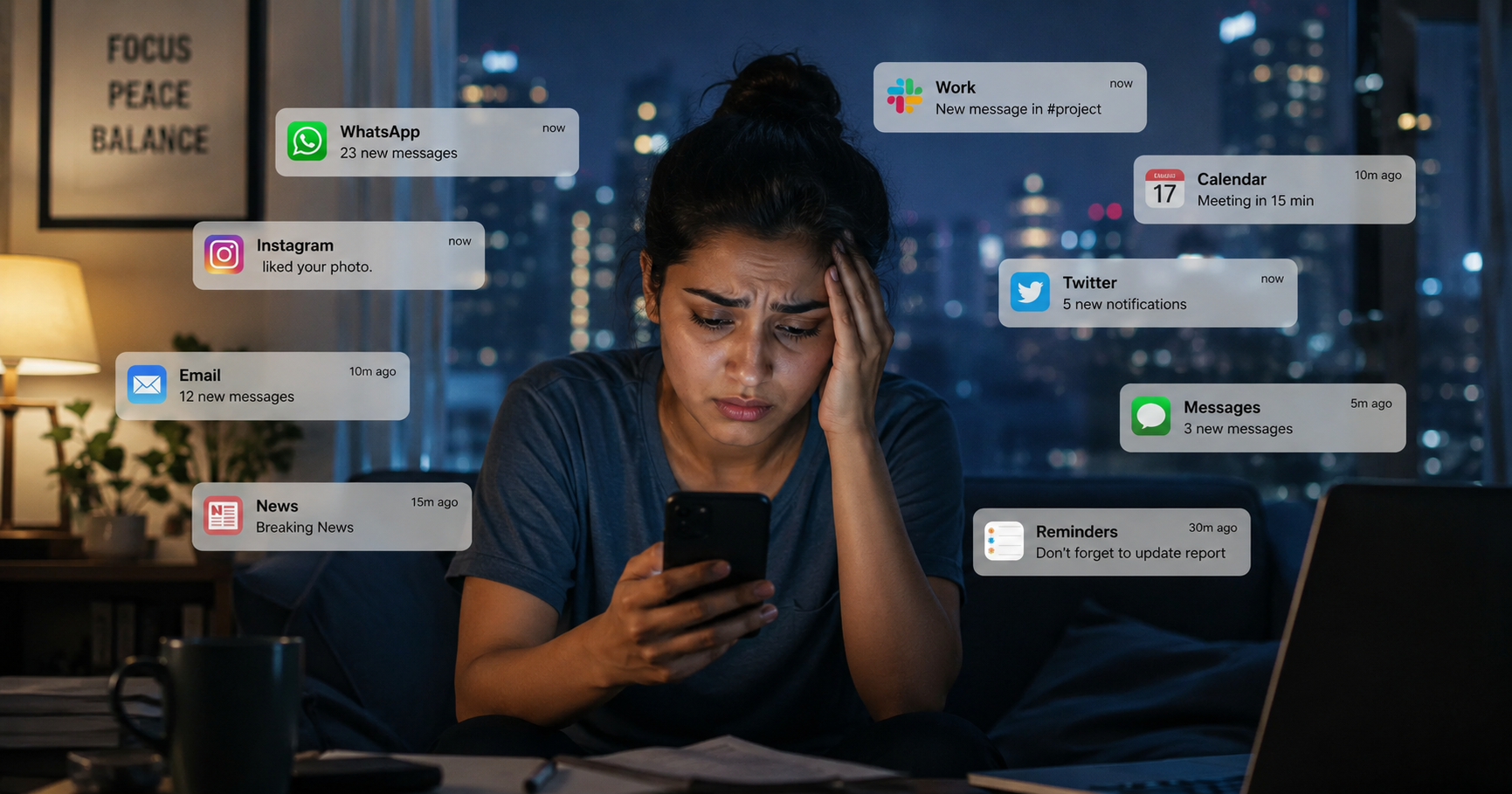
Constant Notifications Stress is making modern urban life mentally exhausting, keeping people stuck in a nonstop cycle of alerts, interruptions, and emotional overload.
Your Brain Is Never Truly Resting Anymore
You wake up to a notification.
Before your feet even touch the floor, your brain has already entered response mode.
A WhatsApp message.
An Instagram reel.
A payment alert.
A Slack notification.
A food delivery discount.
A missed call.
A breaking news headline.
Modern urban life has turned our phones into tiny emergency machines — constantly demanding attention, reaction, and emotional energy.
And while notifications may seem harmless individually, together they create something far heavier:
continuous mental interruption.
That’s why so many people today feel tired even after doing “nothing.”
Why You Feel Mentally Tired Even When Doing Nothing All Day
The Urban Brain Is Overstimulated
In cities, the human brain rarely experiences silence anymore.
Even during moments of rest, we are consuming information:
- scrolling during meals
- checking messages in elevators
- replying to emails in bed
- watching reels while commuting
- listening to podcasts while walking
Our minds are constantly occupied.
The problem is not just screen time.
It is the lack of psychological pause between activities.
Notifications keep the brain in a state of “micro-alertness,” where attention is repeatedly interrupted before it can fully settle.
Over time, this creates:
- mental fatigue
- irritability
- reduced focus
- emotional exhaustion
- anxiety without obvious reason
Many urban professionals describe this feeling as:
“My brain feels full all the time.”
Why Notifications Feel So Draining
Every notification creates a tiny psychological shift.
Even if you ignore it, your brain briefly asks:
- Is this important?
- Should I respond?
- Am I missing something?
- Who needs me now?
This repeated switching burns cognitive energy.
Researchers often call this attention residue — when part of your brain stays stuck on the previous interruption even after you return to your task.
That means your mind never fully resets.
By evening, many people feel mentally exhausted despite barely moving physically.
The Pressure to Always Be Available
Urban digital culture has quietly normalized permanent availability.
People now feel expected to:
- reply instantly
- stay online
- answer work messages after hours
- react to content immediately
- remain socially updated
Even silence now feels socially risky.
Ignoring notifications can create guilt:
- “What if it’s urgent?”
- “People will think I’m rude.”
- “I should respond quickly.”
This creates a low-grade emotional stress running silently in the background all day.
Your nervous system never fully exits performance mode.
Social Media Notifications Are Designed to Pull You Back
Modern apps are not neutral.
They are intentionally designed to capture attention.
Likes, comments, streaks, tags, mentions, and push alerts activate reward systems in the brain. Every notification carries the possibility of novelty, validation, or urgency.
That unpredictability keeps people checking phones repeatedly — even without conscious intention.
This is why many urban users instinctively unlock their phones without even knowing why.
The habit becomes automatic.
And automatic attention loss slowly becomes emotional exhaustion.
Why Quiet Feels Uncomfortable Now
Many people today struggle to sit in silence.
The moment boredom appears, the hand reaches for the phone.
Notifications have trained the brain to expect constant stimulation.
As a result:
- waiting feels unbearable
- slow moments feel empty
- stillness feels unfamiliar
But the brain actually needs pauses to recover.
Without mental downtime, emotional processing gets delayed. Thoughts accumulate. Stress builds quietly in the background.
This is one reason many urban adults feel emotionally overwhelmed late at night.
Silence finally arrives — and so do all the unprocessed thoughts.
Digital Exhaustion Is Becoming a Lifestyle Problem
The most alarming part is how normalized this exhaustion has become.
People proudly say:
- “I’m always reachable.”
- “I barely sleep.”
- “I answer emails instantly.”
- “I’m online all the time.”
But constant connectivity is not productivity.
It is often overstimulation disguised as efficiency.
The human nervous system was never designed for uninterrupted digital interaction 16 hours a day.
And yet millions of urban professionals live exactly like this.
Small Changes That Actually Help
You do not need to quit technology completely.
But your brain needs boundaries.
Simple habits can reduce mental overload dramatically:
1. Turn Off Non-Essential Notifications
Most alerts are not urgent.
Silencing shopping apps, social media pushes, and unnecessary updates immediately reduces mental clutter.
2. Create “No-Phone” Moments
Even 20 minutes without stimulation helps the brain reset.
Try:
- morning chai without scrolling
- device-free meals
- walks without headphones
- screen-free bedtime
3. Stop Sleeping Beside Your Phone
Urban minds rarely get deep psychological rest when notifications remain within reach all night.
4. Allow Delayed Responses
Not every message deserves immediate access to your attention.
Constant availability is not emotional health.
The Real Luxury Today Is Mental Quiet
In modern urban life, silence has become rare.
Attention has become a marketplace.
Every app, brand, platform, and notification competes for your mental space.
That is why protecting your focus is no longer just a productivity hack.
It is emotional self-preservation.
Sometimes the most healing thing you can do is simple:
Put the phone down.
Let the world wait.
Allow your mind to become quiet again.
Try 20 Minute Guided Meditation for Anxiety: Quiet the Busy Mind