Mindful Living Ideas for Everyday Life
What is Mindfulness?
Mindfulness is the practice of being fully present in the moment. It means paying attention to your thoughts, feelings, and surroundings without judgment. In today’s fast-paced world, it’s easy to get caught up in worries about the future or regrets about the past. That’s where mindful living ideas for everyday life can make a real difference.
Why Mindful Living in Everyday Life Matters
Modern life is filled with distractions—phones, social media, and constant multitasking. These habits can lead to stress and burnout. Mindful living helps you slow down, focus, and truly experience life as it happens.
Benefits of Practicing Mindfulness Daily
Mental Health Improvements
Practicing mindfulness regularly can reduce anxiety and depression. It helps calm your mind and improve emotional balance.
Physical Well-being
Mindfulness can lower blood pressure, improve sleep, and even boost your immune system. When your mind is calm, your body benefits too.
Better Relationships
Being present helps you listen better and respond thoughtfully. This leads to stronger and healthier relationships.
Related: 5 Morning Habits That Change Your Life | Simple Daily Routine for Better Mental Health
Morning Mindful Living Ideas
Start Your Day with Gratitude
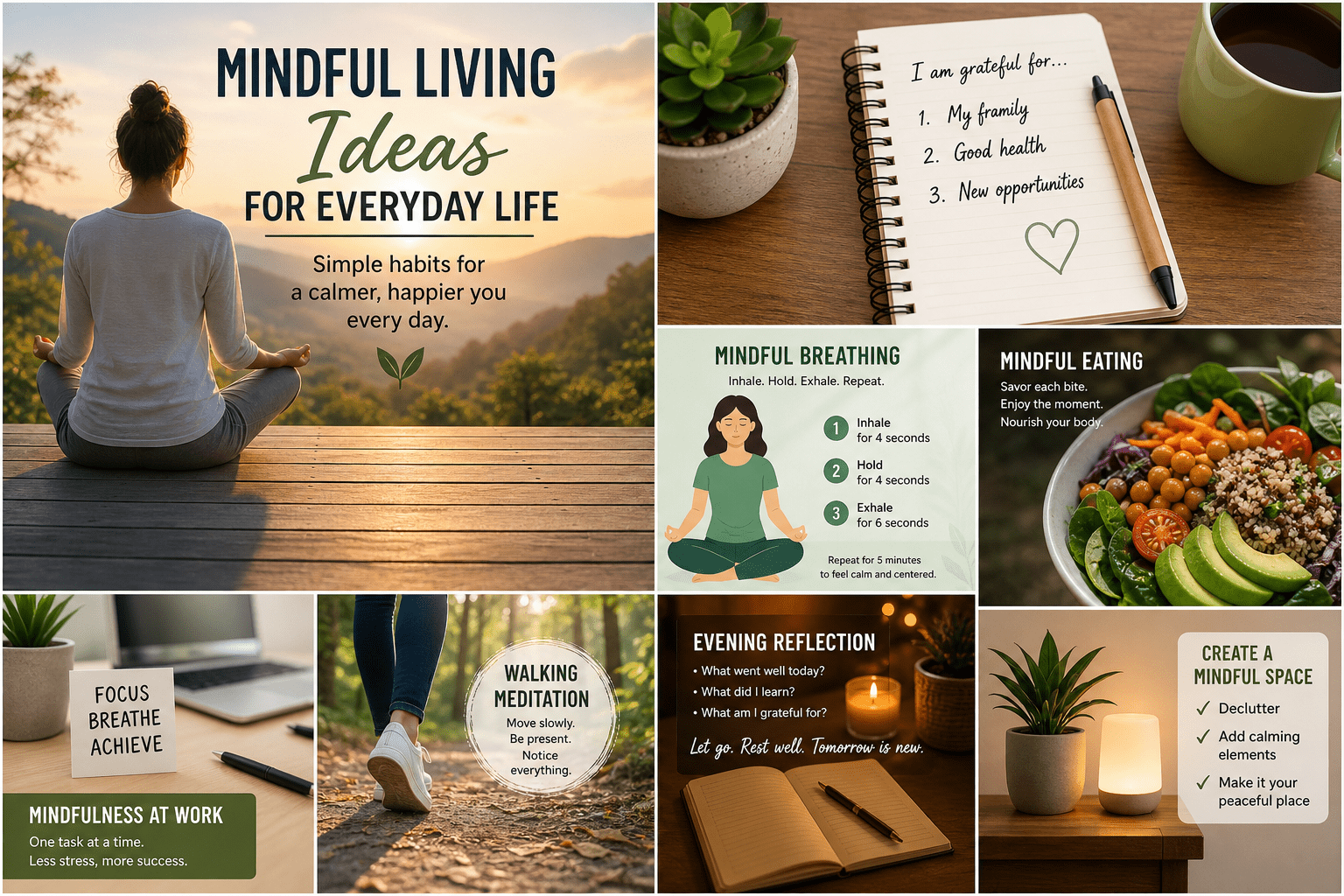
Begin your day by thinking of three things you’re grateful for. It sets a positive tone for the rest of the day.
Mindful Breathing Techniques
Take a few minutes each morning to focus on your breath. Inhale deeply, hold, and exhale slowly.
Simple Breathing Exercises
- Inhale for 4 seconds
- Hold for 4 seconds
- Exhale for 6 seconds
Repeat for 5 minutes to feel calm and centered.
Mindfulness at Work
Staying Focused and Productive
Avoid multitasking. Focus on one task at a time. This improves efficiency and reduces mistakes.
Managing Stress at Work
Take short breaks. Even a 2-minute pause to breathe can refresh your mind and reduce stress.
Mindful Eating Habits
Eating Without Distractions
Turn off your phone and TV while eating. Focus on the taste, texture, and smell of your food.
Understanding Hunger Cues
Learn to distinguish between real hunger and emotional eating. Eat when your body needs it, not when you’re bored.
Digital Detox and Awareness
Reducing Screen Time
Limit your screen time, especially before bed. Too much screen exposure can affect sleep and mental health.
Practicing Conscious Technology Use
Use technology with intention. Ask yourself: “Is this adding value to my life?”
Mindful Movement and Exercise
Yoga and Stretching
Gentle yoga helps connect your mind and body. It improves flexibility and reduces stress.
Walking Meditation
Take a slow walk and focus on each step. Notice the ground beneath your feet and the rhythm of your movement.
Evening Mindful Practices
Reflecting on Your Day
Spend a few minutes reviewing your day. Think about what went well and what you learned.
Sleep Mindfulness Routine
Create a calming bedtime routine. Avoid screens, dim the lights, and relax your mind before sleeping.
Creating a Mindful Environment
Decluttering Your Space
A clean and organized space helps clear your mind. Remove items you don’t need.
Adding Calming Elements
Include plants, soft lighting, or soothing music to create a peaceful environment.
Mindfulness in Relationships
Active Listening
Give your full attention when someone is speaking. Avoid interrupting and truly listen.
Practicing Empathy
Try to understand others’ feelings and perspectives. This builds deeper connections.
Common Challenges and How to Overcome Them
Staying Consistent
Start small. Practice mindfulness for just 5 minutes a day and gradually increase.
Avoiding Overthinking
Don’t try to be perfect. Mindfulness is about awareness, not control.
FAQs About Mindful Living
1. What are simple mindful living ideas for everyday life?
Simple ideas include mindful breathing, gratitude journaling, and eating without distractions.
2. How long should I practice mindfulness daily?
Even 5–10 minutes a day can make a big difference.
3. Can mindfulness reduce stress?
Yes, it helps calm the mind and manage stress effectively.
4. Is mindfulness the same as meditation?
Meditation is one way to practice mindfulness, but mindfulness can be done anytime.
5. Can children practice mindful living?
Absolutely! Simple breathing exercises and awareness activities work well for kids.
6. How do I stay consistent with mindfulness?
Set reminders, start small, and make it part of your daily routine.
Conclusion
Mindful living isn’t about making big changes overnight. It’s about small, consistent steps that help you live with awareness and intention. By applying these mindful living ideas for everyday life, you can reduce stress, improve your well-being, and enjoy each moment more fully.
Start today—take a deep breath, slow down, and truly experience life as it unfolds.
>For more mindful living in everyday life follow me on Instagram