Alone time rituals are redefining self-care. Discover calming, aesthetic practices that build emotional independence, regulate your nervous system, and help you feel at home within yourself.
In a world that constantly demands connection—messages, notifications, conversations, expectations—something quiet is rising in response: the intentional practice of being alone.
Not loneliness. Not isolation. But chosen solitude.
Welcome to the era of alone time rituals—a softer, more conscious approach to self-care that prioritizes emotional clarity, nervous system regulation, and inner connection. Across the globe, people are rediscovering the beauty of sitting with themselves, creating small, aesthetic moments that feel grounding rather than performative.
Being alone is no longer something to “fix.” It’s something to cultivate.
Why Alone Time Is Trending Now
Modern life is overstimulating. Between digital overload and emotional burnout, many people are experiencing subtle exhaustion—not just physically, but mentally and emotionally.
Alone time rituals offer an antidote.
They align with three rising shifts:
- Emotional independence: People are learning to self-soothe rather than constantly seeking external validation
- Nervous system awareness: There’s growing interest in calm, regulation, and slow living
- Intentional lifestyles: A move away from chaos toward mindful, aesthetic living
This isn’t about escaping the world—it’s about returning to yourself.
The Difference Between Being Alone and Feeling Lonely
Loneliness feels like lack.
Alone time rituals feel like presence.
The difference lies in intention. When solitude is chosen, it becomes nourishing. You’re not waiting for something to fill the silence—you’re engaging with it.
And in that silence, something powerful happens: your mind slows down, your body softens, and your emotions begin to surface in a way that feels manageable rather than overwhelming.
How Alone Time Regulates Your Nervous System
Your nervous system is constantly scanning for safety. When you’re overstimulated—too much noise, too many interactions, too much input—it stays in a heightened state.
Alone time rituals act as signals of safety.
Simple, repetitive, and calming activities help your body shift from a stress response (fight or flight) into a relaxed state (rest and digest). This is where healing, clarity, and creativity happen.
Think of it this way: solitude creates space for your system to exhale.
> Unlocking Inner Peace: Nurturing the Art of Solitude
Aesthetic Alone Time Rituals to Try
These rituals aren’t about productivity—they’re about presence. Small, sensory, and intentional, they transform ordinary moments into grounding experiences.
1. The Tea Ritual
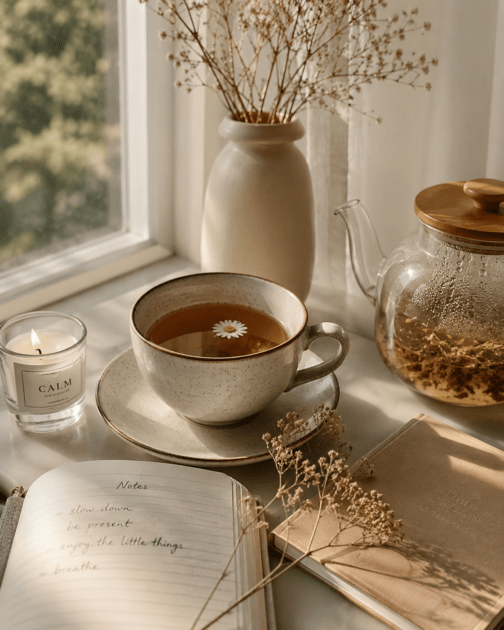
There’s something inherently calming about making tea slowly.
Boil the water. Watch the steam rise. Notice the color deepen. Hold the warmth of the cup in your hands.
Instead of drinking it while scrolling, sit with it.
Let it become a pause in your day—a moment where nothing is required of you.
This ritual works because it combines warmth, repetition, and stillness—all signals that calm the nervous system.
2. Window Time
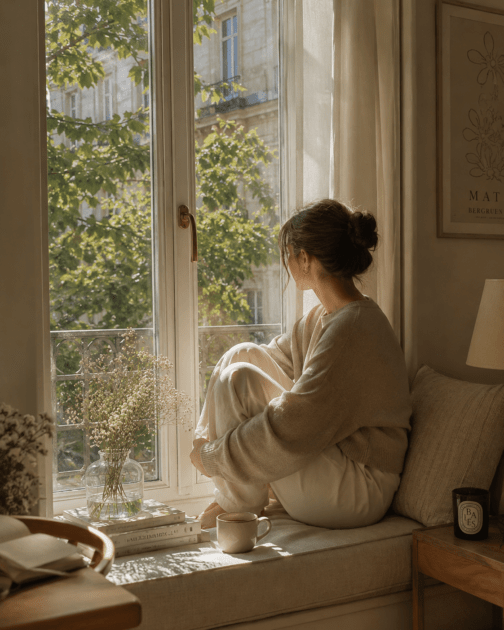
Sit by a window without distractions.
No phone. No music. Just observation.
Watch light shift across buildings. Notice people passing. Feel the quiet movement of the outside world while you remain still inside.
This practice encourages gentle awareness without overstimulation. It’s a form of mindfulness that doesn’t require effort—just presence.
3. Journaling Without Structure
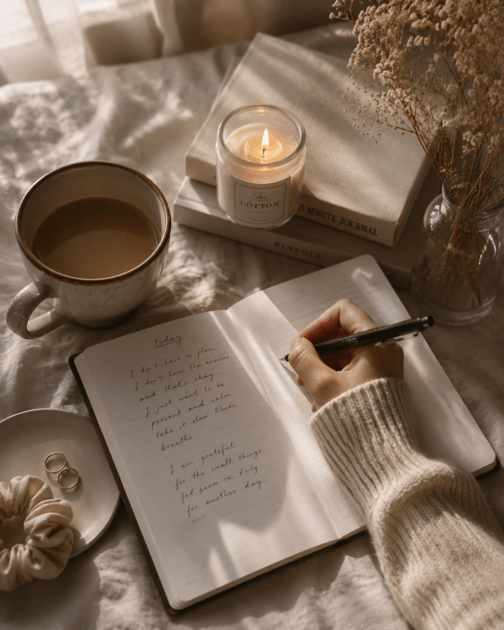
Forget prompts. Forget perfection.
Open a notebook and let your thoughts spill as they are—messy, repetitive, unclear.
This is emotional processing in its rawest form.
When you write without filtering, you allow suppressed thoughts to surface. Over time, this creates emotional clarity and reduces internal noise.
Think of journaling as a conversation with yourself that no one else hears.
4. Silent Mornings
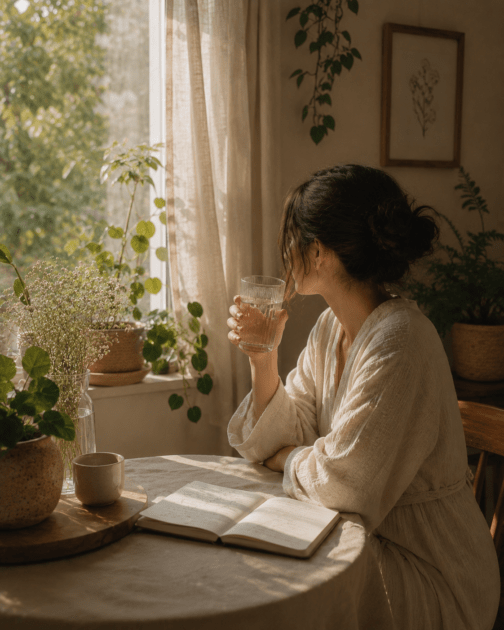
Before the world enters your space, stay in silence.
No immediate notifications. No conversations. No input.
Sit, stretch, sip water, or simply breathe.
Even 10–15 minutes of silence in the morning can set the tone for your entire day. It tells your mind: you don’t have to rush.
5. Slow Cleaning as Meditation
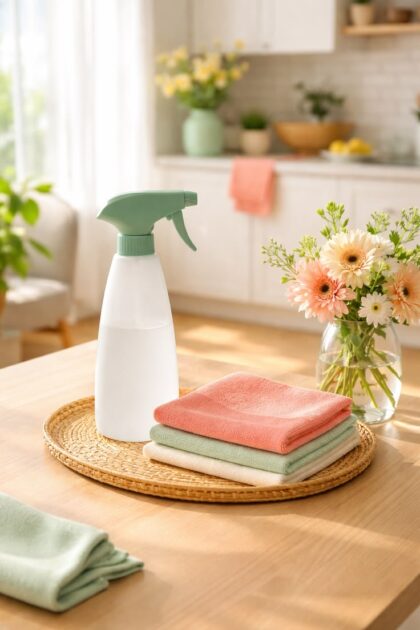
Turn a simple task—washing dishes, folding clothes, wiping surfaces—into a mindful ritual.
Focus on the movement. The textures. The rhythm.
This transforms a mundane chore into a grounding activity, helping you stay present while also creating order in your physical space.
A calm environment often leads to a calmer mind.
6. The “Do Nothing” Ritual
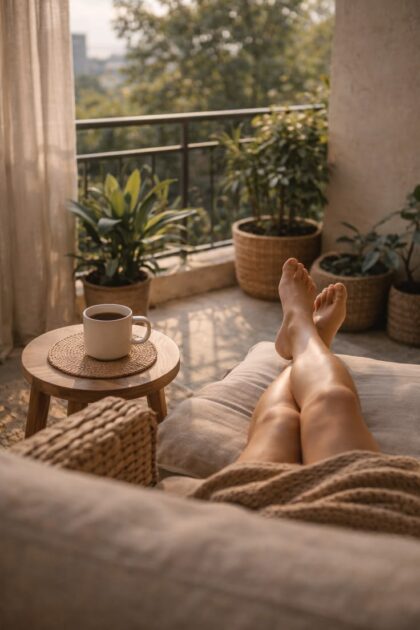
This might be the hardest—and most powerful—of all.
Sit or lie down without trying to fill the moment.
No productivity. No entertainment. No goal.
At first, it may feel uncomfortable. Your mind may resist.
But if you stay, you’ll notice something shift.
Rest, in its purest form, is deeply restorative.
7. Evening Wind-Down Corners
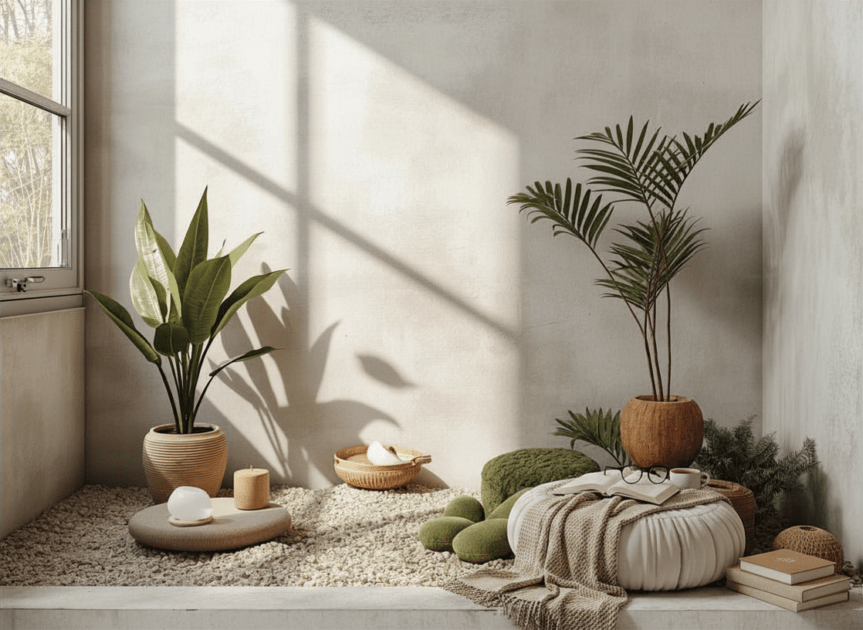
Create a small, intentional space for unwinding.
A chair, a soft light, a book, maybe a candle.
Return to this space every evening—not for scrolling, but for slowing down.
Over time, your brain will associate this corner with calm, making it easier to relax.
The Emotional Benefits of Alone Time Rituals
When practiced consistently, these rituals create subtle but powerful changes:
- Increased self-awareness: You begin to understand your thoughts and emotions without reacting to them immediately
- Reduced anxiety: A regulated nervous system leads to less overwhelm
- Stronger emotional independence: You rely less on external validation
- Deeper clarity: Decisions become easier when your mind is not cluttered
You start to feel at home within yourself.
Why Aesthetic Matters
You might notice that many of these rituals are described as aesthetic—soft lighting, warm drinks, quiet corners.
This isn’t superficial.
Aesthetic environments influence how we feel. Soft textures, natural light, and calming visuals signal safety to the brain.
In a way, you’re designing your external space to support your internal state.
Beauty becomes functional.
Making Alone Time a Habit (Without Forcing It)
The key to building alone time rituals is simplicity.
Start small.
- Choose one ritual
- Keep it short (5–10 minutes)
- Do it consistently, not perfectly
You don’t need an hour of solitude to feel the effects. Even brief moments of intentional stillness can create a noticeable shift.
And importantly—don’t treat it as another task to complete.
Alone time is not something to achieve. It’s something to return to.
The Cultural Shift: From Busy to Being
For years, productivity defined worth.
Now, there’s a quiet rebellion happening.
People are beginning to value:
- Slowness over speed
- Presence over performance
- Depth over distraction
Alone time rituals reflect this shift. They’re not loud or dramatic—but they’re deeply transformative.
They ask a simple question:
What happens when you stop running and start sitting with yourself?
Final Thoughts
Being alone is no longer something to avoid—it’s something to refine.
In solitude, you meet yourself without noise. Without expectation. Without performance.
And in that meeting, you begin to build a relationship that no external connection can replace.
So the next time you find yourself alone, don’t rush to fill the space.
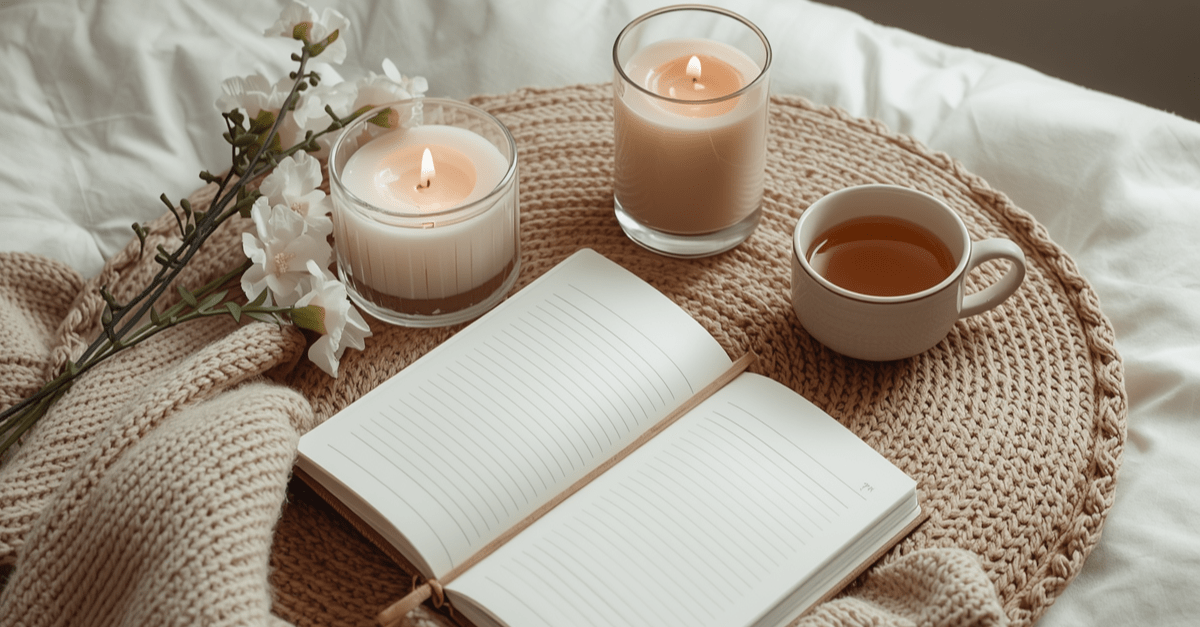
Light a candle. Pour a cup of tea. Sit by the window.
And let the moment be enough.