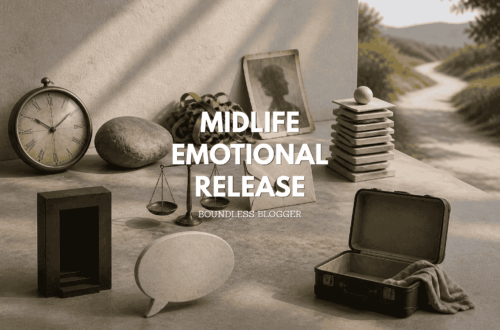
Toxic positivity encourages us to suppress difficult emotions in favor of constant optimism. True healing begins when we allow ourselves to feel, reflect, and process our pain with honesty and compassion.
Somewhere along the way, we became uncomfortable with sadness.
The moment someone shares that they are struggling, feeling lost, heartbroken, anxious, or simply not okay, the advice arrives almost instantly:
“Think positive.”
“Manifest better things.”
“Focus on gratitude.”
“Everything happens for a reason.”
While these words may come from a place of care, they often leave no room for what is actually happening inside us.
Not every painful moment is asking to be reframed.
Sometimes it is asking to be felt.
When I am hurting, I don’t always want to search for a silver lining. I don’t want to convince myself that everything is perfect. I don’t want to force gratitude when my heart is heavy.
I want to sit with the truth of what I am feeling.
I want to cry if tears need to come.
I want to feel disappointed if something has disappointed me.
I want to acknowledge my anger, grief, fear, or loneliness without immediately trying to replace them with something more acceptable.
That isn’t negativity.
That is honesty.
Toxic positivity teaches us that uncomfortable emotions are problems to solve as quickly as possible. But emotions are not mistakes. They are messages.
Pain often arrives carrying information.
Why did this affect me so deeply?
What wound did it touch?
What expectation was broken?
What am I afraid of losing?
What part of me is asking for attention right now?
These questions cannot be answered through forced optimism.
They require presence.
Healing has never been a race. It is an organic process. Just as a physical wound takes time to close, emotional wounds need space, compassion, and understanding.
No one can rush that process by repeating positive affirmations.
Real healing happens when we stop resisting what we feel and become curious about it instead.
The truth is, most of us already know how to heal.
Our minds and bodies are remarkably intelligent. Given enough awareness and self-compassion, we naturally move toward balance. We learn. We adapt. We recover.
But first, we must allow ourselves to be where we are.
Not where society thinks we should be.
Not where motivational quotes tell us to be.
Not where manifestation culture insists we must be.
Just where we are.
5 Reasons Why You Should Stop Chasing Manifestation and Start Living
And when we have truly felt our sadness, processed our disappointment, and understood our pain, something beautiful happens.
We begin to heal—not because we forced ourselves to be positive, but because we finally listened to ourselves.
Then hope returns naturally.
Strength returns naturally.
Joy returns naturally.
Not as an act.
Not as a performance.
But as a genuine expression of a heart that has been allowed to feel, understand, and heal.
Sometimes the most positive thing you can do is stop pretending to be positive and give yourself permission to be human.
Check out my another self-reflection on: The Person I Was Searching for Was Me