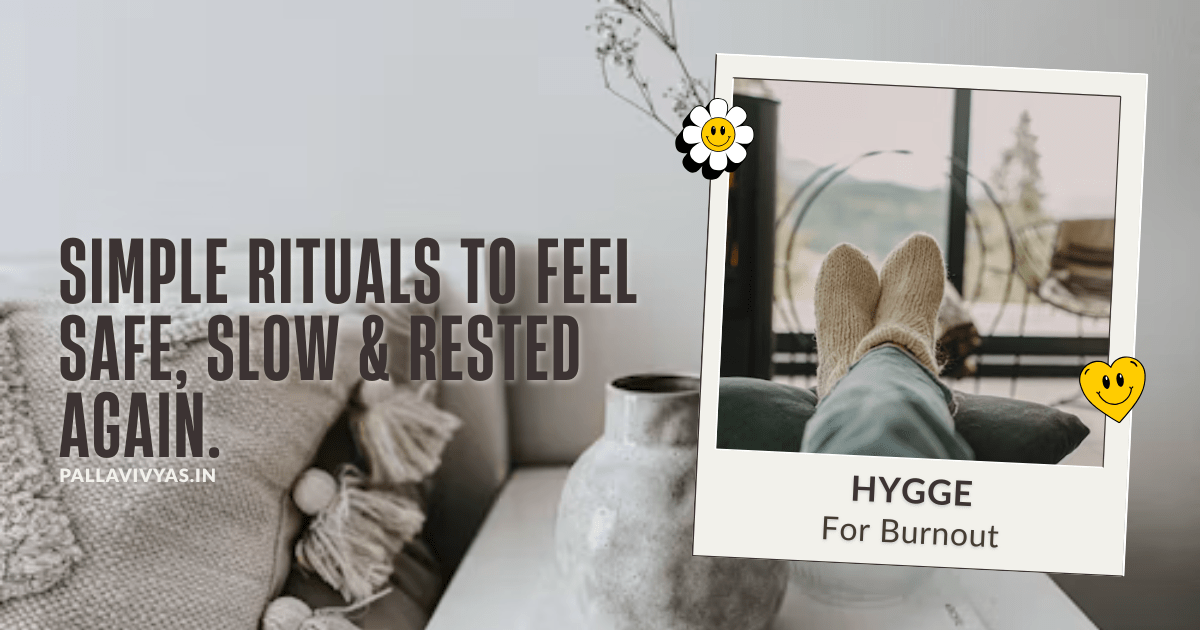
Feeling burned out? Explore hygge-inspired rituals that help you slow down, feel safe, and gently restore your energy—one calming moment at a time.
Introduction
Burnout doesn’t always arrive loudly. Sometimes it seeps in quietly—through constant fatigue, low motivation, emotional numbness, or a sense that even rest doesn’t feel restful. In a world that glorifies productivity, slowing down can feel unfamiliar, even uncomfortable.
This is where hygge—the Danish art of coziness and comfort—offers a gentle alternative. Hygge isn’t about escape. It’s about creating small, intentional moments that help your body feel safe again. And safety is where real restoration begins.
Understanding Burnout Beyond Exhaustion
Burnout is more than being tired. It’s a deep depletion—physical, emotional, and mental. You may notice:
- Difficulty concentrating
- A sense of detachment from things you once enjoyed
- Persistent fatigue, even after sleep
- Irritability or emotional overwhelm
What’s often missing isn’t just rest—it’s nervous system regulation. Your body doesn’t feel safe enough to truly relax.
Hygge works because it speaks directly to this need.
What Hygge Really Means (and Why It Heals)
Hygge is not just candles and blankets. It’s a feeling of warmth, simplicity, and presence. It invites you to:
- Slow down without guilt
- Find comfort in small, everyday moments
- Reconnect with yourself in a gentle, non-demanding way
For someone experiencing burnout, hygge becomes less of a lifestyle trend and more of a healing practice.
Simple Hygge Rituals for Burnout Recovery
1. Create a “Soft Landing” at the End of Your Day
Instead of scrolling or rushing into sleep, design a calming transition:
- Dim the lights
- Light a candle or use warm lighting
- Sit quietly with tea or just your breath
This signals to your body: you are safe to unwind now.
2. Slow Mornings Without Urgency
Burnout often comes from constant urgency. Try removing that, even briefly:
- Avoid your phone for the first 20–30 minutes
- Sit by a window with natural light
- Stretch gently or simply do nothing
You’re not being unproductive—you’re recalibrating.
3. Comfort Through the Senses
Hygge is deeply sensory. Engage your senses intentionally:
- Warm drinks like tea or coffee
- Soft textures—blankets, cozy clothing
- Calming sounds or silence
These small inputs help regulate your nervous system more than you might expect.
4. Ritualize Rest (Not Just Sleep)
Rest doesn’t always mean sleep. It can be:
- Sitting quietly without stimulation
- Reading something light and comforting
- Journaling your thoughts without judgment
The key is intentional pause, not passive distraction.
5. Safe, Gentle Connection
Burnout can make socializing feel exhausting. Instead of isolating completely:
- Connect with one trusted person
- Share space without pressure to “perform”
- Even silent companionship can be healing
Safety in relationships restores emotional energy.
6. Let Go of “Fixing Yourself”
One of the hidden drivers of burnout is the constant need to improve, optimize, or fix yourself.
Hygge invites a different approach:
You don’t need to become better in this moment. You just need to feel held—by your environment, your rituals, and your own presence.
Why These Small Rituals Work
These practices may seem simple, even insignificant. But burnout recovery doesn’t come from drastic change—it comes from consistency in small, safe moments.
Each ritual tells your body:
- You are not in danger
- You don’t need to rush
- You are allowed to rest
Over time, this rewires how you experience stress and recovery.
A Gentle Reminder
You don’t have to overhaul your life to heal from burnout. You don’t need perfect routines or rigid discipline.
Start with one moment.
One candle.
One quiet morning.
One breath without urgency.
That’s how safety returns. That’s how energy slowly rebuilds.
Conclusion
Hygge for burnout is not about aesthetics—it’s about nervous system healing. It’s about creating spaces and moments where you can soften, slow down, and simply exist without pressure.
In a fast-moving world, choosing gentleness is a quiet act of self-preservation.
And sometimes, that’s exactly what you need.
> 5 Gentle Ways to Escape Quiet Burnout & Tired-But-Wired Mornings