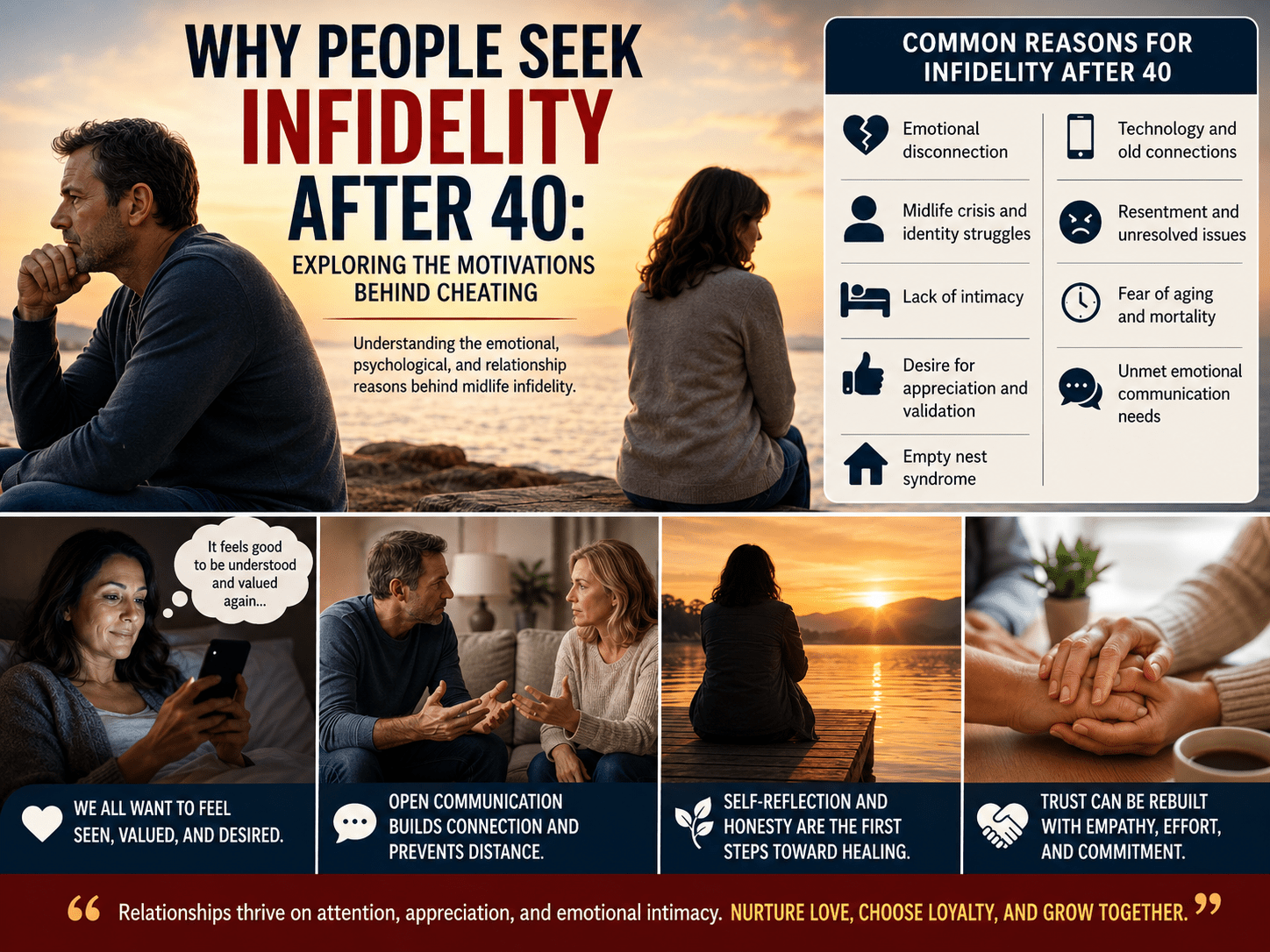
Understanding why people seek infidelity after 40 reveals the emotional loneliness, unmet desires, and midlife struggles that quietly push many long-term relationships toward emotional or physical betrayal.
Why People Seek Infidelity After 40: Exploring the Motivations Behind Cheating
Relationships evolve with age. The excitement of youth slowly transforms into routine, responsibility, and emotional familiarity. Yet for many couples, reaching their 40s can also uncover emotional cracks that were hidden for years. That is why discussions around why people seek infidelity after 40 have become increasingly common in modern society.
Cheating after 40 is rarely about simple physical attraction. In many cases, it reflects deeper emotional struggles, identity shifts, loneliness, or unresolved dissatisfaction within a relationship. Midlife often forces people to confront questions about happiness, purpose, aging, and emotional fulfillment. When these questions remain unanswered, some individuals begin seeking validation or excitement outside their marriage or long-term partnership.
Understanding the motivations behind infidelity after 40 does not excuse betrayal. However, it helps explain why even stable relationships sometimes face unexpected emotional turbulence during midlife. By examining these motivations honestly, couples can better understand each other and potentially prevent emotional distance from growing into betrayal.
The Emotional Shift That Happens After 40
Turning 40 often marks a psychological transition. People begin evaluating their lives more seriously. Career achievements, parenting responsibilities, aging parents, health concerns, and changing personal goals can all create emotional pressure.
For many adults, this period sparks self-reflection:
- “Am I truly happy?”
- “Is this the life I imagined?”
- “Have I lost part of myself?”
- “Does my partner still see me the same way?”
These thoughts can lead to emotional vulnerability. If someone feels unseen, unappreciated, or emotionally disconnected, they may become more open to attention from others.
Unlike youthful affairs driven mainly by impulse, infidelity after 40 is often tied to emotional longing. People may crave excitement, validation, intimacy, or simply the feeling of being desired again.

1. Emotional Neglect in Long-Term Relationships
One major reason behind why people seek infidelity after 40 is emotional neglect. Long-term relationships sometimes become overly focused on responsibilities instead of connection.
Over time, couples may stop:
- Having meaningful conversations
- Expressing affection regularly
- Prioritizing intimacy
- Supporting each other emotionally
- Spending quality time together
When emotional intimacy fades, loneliness can quietly grow inside the relationship itself. A person may still love their spouse while feeling emotionally abandoned at the same time.
An outside connection can suddenly feel exciting because it provides:
- Attention
- Appreciation
- Emotional understanding
- Active listening
- Romantic energy
Many emotional affairs begin with simple conversations that slowly become emotionally intimate.
2. Midlife Crisis and Identity Struggles
Midlife crises are real for many people. Around 40 or 50, individuals often become deeply aware of aging and mortality.
This realization can trigger anxiety about:
- Lost opportunities
- Physical aging
- Career dissatisfaction
- Personal regrets
- Unfulfilled dreams
Some individuals seek affairs as a way to “feel young again.” Attention from a new partner may temporarily restore confidence and excitement.
Cheating can become an emotional escape from fears connected to aging. A new relationship may create the illusion of starting over, rediscovering passion, or reclaiming lost identity.
However, these emotional highs are often temporary because the deeper internal struggles remain unresolved.
3. Lack of Physical Intimacy
Physical intimacy naturally changes in long-term relationships. Stress, parenting, work pressure, health conditions, hormonal changes, and emotional distance can all affect sexual connection.
For some couples, intimacy becomes infrequent or emotionally disconnected. When one partner feels rejected repeatedly, resentment may begin building quietly.
This does not mean every person who experiences sexual frustration will cheat. But unmet physical and emotional needs can create vulnerability, especially when someone else offers attention or desire.
After 40, many individuals also become more aware of their changing bodies and attractiveness. Validation from another person can feel emotionally powerful during this stage of life.
4. The Desire to Feel Appreciated Again
Appreciation plays a major role in healthy relationships. Unfortunately, long-term couples sometimes stop expressing gratitude openly.
People want to feel:
- Valued
- Desired
- Respected
- Admired
- Important
When these emotional needs go unmet for years, external attention may feel addictive.
A coworker complimenting appearance, an old friend reconnecting online, or someone showing emotional interest can awaken feelings that seemed lost.
In many infidelity cases after 40, the affair is less about sex and more about emotional validation.
5. Empty Nest Syndrome and Life Transitions
Children often become the center of family life for decades. But once kids grow up and leave home, couples may suddenly realize they no longer feel emotionally connected.
This transition can expose unresolved relationship issues that parenting once distracted them from facing.
Without shared responsibilities filling daily life, emotional distance becomes more noticeable.
Some people experience:
- Loneliness
- Loss of identity
- Relationship boredom
- Emotional emptiness
This vulnerability sometimes pushes individuals to seek emotional excitement elsewhere.
6. Technology and Social Media Reconnection
Modern technology has changed relationships dramatically. Social media platforms make it easier than ever to reconnect with former partners, classmates, or old crushes.
At midlife, nostalgia becomes emotionally powerful. Reconnecting with someone from the past may trigger memories of youth, freedom, and emotional excitement.
Online conversations can quickly become emotionally intimate because:
- They feel private
- They offer emotional escape
- They provide instant validation
- They avoid real-life responsibilities temporarily
Many affairs after 40 now begin digitally before becoming physical.
For relationship psychology insights, readers can also explore resources from Psychology Today.
7. Resentment Built Over Years
Unresolved resentment silently damages relationships over time.
Common causes include:
- Financial stress
- Emotional neglect
- Repeated arguments
- Lack of support
- Betrayals of trust
- Unequal responsibilities
When resentment remains unaddressed, emotional disconnection grows stronger. Some people begin justifying emotional or physical affairs as compensation for unhappiness.
Instead of confronting problems directly, they escape emotionally through another relationship.
8. Fear of Aging and Mortality
Aging can create emotional insecurity, especially when society strongly values youth and attractiveness.
After 40, some individuals struggle with:
- Declining self-esteem
- Physical appearance concerns
- Fear of becoming undesirable
- Anxiety about lost youth
An affair may temporarily boost confidence and create the illusion of renewed vitality.
This explains why some midlife affairs appear impulsive or emotionally intense. They are often linked to identity fears rather than purely romantic feelings.
9. Unmet Emotional Communication Needs
Healthy relationships depend heavily on communication. Yet many couples stop sharing vulnerable emotions honestly after years together.
People may hide:
- Frustration
- Sadness
- Insecurity
- Loneliness
- Sexual dissatisfaction
Over time, emotional walls grow higher.
When someone finally encounters another person who listens deeply or understands their emotions, emotional attachment can develop quickly.
This emotional intimacy can become the foundation for infidelity.
Can Relationships Recover After Infidelity?
Yes, some relationships survive infidelity after 40. In fact, many couples rebuild stronger emotional foundations after confronting painful truths honestly.
Recovery usually requires:
- Honest communication
- Accountability
- Emotional transparency
- Professional counseling
- Rebuilding trust slowly
- Understanding underlying issues
Healing is not easy, but it is possible when both partners are genuinely committed to growth.
Infidelity often reveals unmet emotional needs that existed long before the affair itself.
Final Thoughts on Why People Seek Infidelity After 40
Understanding why people seek infidelity after 40 requires looking beyond stereotypes. Most midlife affairs are not simply about lust or excitement. They are deeply connected to emotional disconnection, identity struggles, loneliness, aging fears, and unmet emotional needs.
After 40, people often reevaluate their lives and relationships more intensely. If emotional intimacy has weakened over time, vulnerability to outside connections increases.
Strong relationships require ongoing emotional attention, honest communication, appreciation, and intimacy. Couples who continue nurturing emotional connection are far more likely to navigate midlife transitions successfully together.
Rather than viewing infidelity only as betrayal, understanding its deeper motivations may help couples identify emotional gaps before they become destructive.