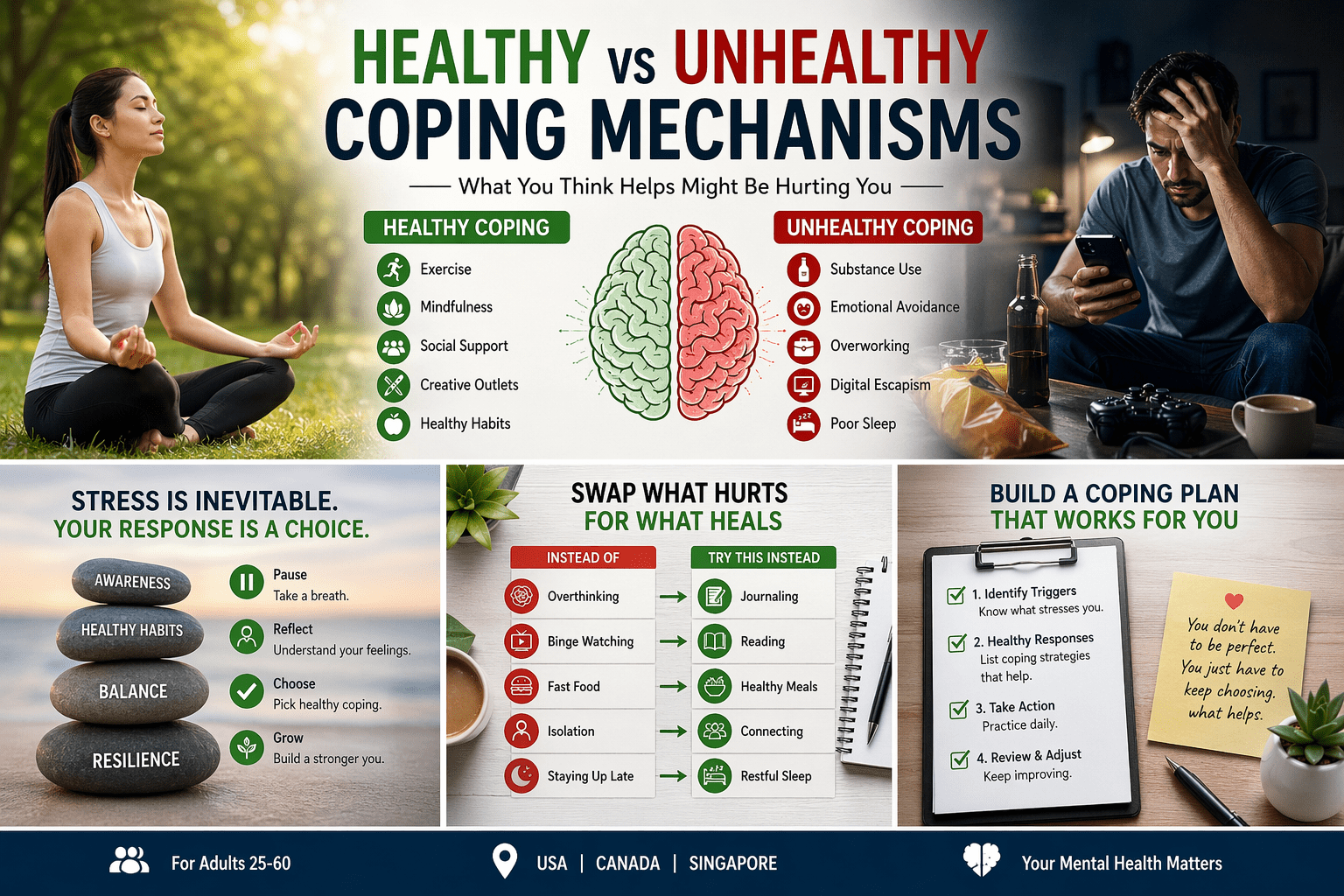
Understanding healthy vs unhealthy coping mechanisms is essential in today’s high-pressure urban lifestyle. Many habits that seem helpful—like overworking or scrolling endlessly—may actually be hurting your mental health. This guide explores what truly works and how to build healthier ways to cope.
Introduction to Coping Mechanisms in Modern Urban Life
In today’s fast-paced world, understanding healthy vs unhealthy coping mechanisms is more important than ever. Whether you’re navigating a demanding job in New York, managing family life in Toronto, or balancing career pressures in Singapore, stress is unavoidable. But how you respond to stress—that’s where everything changes.
Why Coping Strategies Matter More Than Ever
Urban living comes with constant stimulation, deadlines, and social expectations. Without effective coping strategies, stress can build up quickly, leading to burnout, anxiety, and even physical health problems.
Mental Health Trends in the USA, Canada, and Singapore
Across these regions, mental health awareness is growing, yet many adults still rely on coping habits that may do more harm than good. Long working hours, digital overload, and social isolation are common contributors.
What Are Coping Mechanisms?
Definition and Psychological Perspective
Coping mechanisms are the thoughts and behaviors people use to manage stress, emotions, and difficult situations. They can be conscious or unconscious.
Types of Coping Mechanisms
Emotional Coping
This focuses on managing feelings rather than solving the problem.
Problem-Focused Coping
This involves tackling the issue directly to reduce stress.
Healthy vs Unhealthy Coping Mechanisms Explained
Key Differences Between Healthy and Unhealthy Coping
Healthy coping mechanisms:
- Improve long-term well-being
- Address root causes
- Build resilience
Unhealthy coping mechanisms:
- Provide short-term relief
- Avoid the problem
- Often create new issues
Why Unhealthy Coping Feels Good Initially
Unhealthy habits often give immediate comfort. That’s because they trigger the brain’s reward system, releasing feel-good chemicals. But over time, they can lead to dependency and emotional instability.
> 5 Gentle Ways to Escape Quiet Burnout & Tired-But-Wired Mornings
Common Healthy Coping Mechanisms
Physical Activities and Exercise
Exercise is one of the most effective ways to manage stress. It improves mood, boosts energy, and enhances mental clarity.
Mindfulness and Meditation
Practices like meditation help calm the mind and reduce anxiety. Even a few minutes a day can make a difference.
Social Support Systems
Talking to friends, family, or support groups can provide emotional relief and perspective.
Creative Outlets
Activities like writing, painting, or music allow you to express emotions in a constructive way.
Common Unhealthy Coping Mechanisms
Substance Use and Dependency
Alcohol, drugs, and even excessive caffeine can become crutches for dealing with stress.
Emotional Avoidance
Ignoring problems or suppressing emotions may seem helpful but often leads to bigger issues later.
Overworking and Burnout
Many professionals cope by working more, thinking productivity will solve stress—but it often worsens it.
Digital Escapism
Endless scrolling, gaming, or binge-watching can distract from stress but doesn’t resolve it.
Psychological Reasons Behind Unhealthy Habits
Instant Gratification and Dopamine
The brain craves quick rewards. Unhealthy coping methods often provide instant pleasure, making them addictive.
Stress and Cognitive Overload
When overwhelmed, the brain looks for the easiest escape, not necessarily the healthiest one.
Signs Your Coping Mechanisms Are Hurting You
Emotional Warning Signs
- Persistent anxiety
- Mood swings
- Feeling numb or disconnected
Behavioral Red Flags
- Avoiding responsibilities
- Increased substance use
- Social withdrawal
How to Shift from Unhealthy to Healthy Coping
Awareness and Self-Reflection
Recognizing harmful patterns is the first step toward change.
Replacing Habits Gradually
Instead of quitting abruptly, replace unhealthy habits with better alternatives.
Seeking Professional Help
Therapists and counselors can provide guidance tailored to your situation.
> The Most Underrated Skill to Bounce Back (No One Talks About This)
Coping Mechanisms for Urban Professionals (25–60 Age Group)
Work-Life Balance Strategies
- Set clear boundaries
- Take regular breaks
- Prioritize rest
> Navigating the Art of Setting Boundaries
Managing Digital Stress
Limit screen time and create tech-free zones in your daily routine.
Cultural Perspectives on Coping
Western vs Asian Coping Styles
Western cultures often encourage open emotional expression, while Asian cultures may emphasize restraint and resilience. Understanding these differences can help tailor coping strategies.
Building Long-Term Emotional Resilience
Daily Practices for Stability
- Journaling
- Exercise
- Mindfulness
Creating a Personal Coping Plan
Identify triggers, list healthy responses, and track progress over time.
FAQs About Healthy vs Unhealthy Coping Mechanisms
1. What are examples of unhealthy coping mechanisms?
Examples include substance abuse, overeating, avoidance, and excessive screen time.
2. Why do people use unhealthy coping mechanisms?
They provide quick relief and are easier to adopt during stressful moments.
3. Can unhealthy coping mechanisms be changed?
Yes, with awareness, effort, and support, they can be replaced with healthier habits.
4. How do I know if my coping mechanism is unhealthy?
If it causes long-term harm or avoids the root problem, it’s likely unhealthy.
5. Are all coping mechanisms learned?
Most are developed over time based on experiences and environment.
6. When should I seek professional help?
If stress becomes overwhelming or affects daily life, it’s time to consult a professional.
Conclusion: Choosing What Truly Helps
Understanding healthy vs unhealthy coping mechanisms is a powerful step toward better mental health. While unhealthy habits may feel comforting in the moment, they often create more problems in the long run.
The good news? You can change your coping strategies at any time. By choosing healthier options, building awareness, and seeking support when needed, you can create a more balanced and fulfilling life.
External Resource
For further reading, visit:
https://www.apa.org/topics/stress