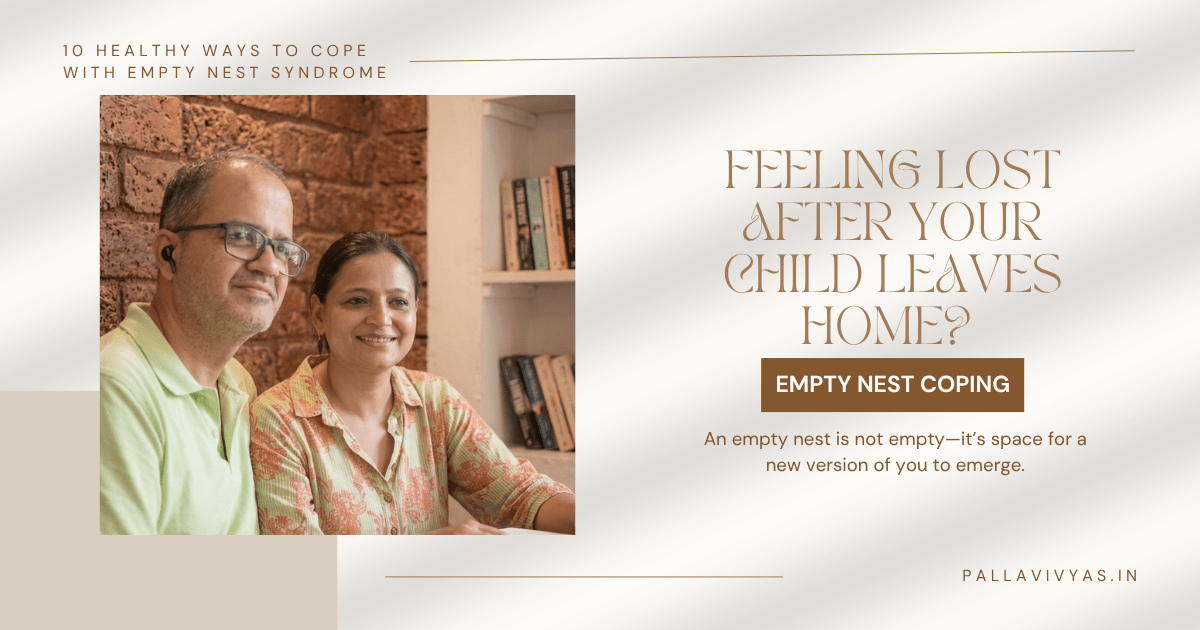
Empty nest coping becomes essential when children leave home. It helps parents rediscover identity, emotional balance, and purpose. This marks a new phase in their lives.
Understanding Empty Nest Syndrome (ENS)
Empty Nest Syndrome is a psychological and emotional transition parents experience when children leave home for studies, jobs, or marriage. It often feels bittersweet—a mix of pride and deep emotional loss.
Most parents go through a phase of emotional adjustment that can include loneliness, anxiety, and a sense of losing purpose. This transition can last a few months to a couple of years. The duration depends on emotional resilience, support systems, and life structure.
Real Pain Points Parents Experience
Across conversations in parenting communities and social discussions, some common patterns emerge:
- A feeling of losing identity beyond being a parent
- Silence in the house, especially during evenings
- Constant worry about children living in another city or country
- Loss of daily structure and routine
- Emotional dependency on children
- Realizing gaps in marriage or personal relationships
These feelings are deeply human and more common than openly discussed.
10 Healthy Ways to Cope with Empty Nest Syndrome
1. Redefine Your Identity Beyond Parenthood
For years, parenting was central to your life. This phase invites you to reconnect with yourself as an individual.
Start asking what genuinely interests you, what you postponed, and what you want your next chapter to look like.
2. Create a New Daily Routine
A major challenge is the sudden absence of structure. Building a new routine helps restore stability.
Include intentional habits like morning walks, reading time, or learning something new to create a sense of rhythm.
3. Strengthen Your Marriage or Personal Relationships
Many parents realize that their relationship revolved around children. This is an opportunity to reconnect.
Spend quality time together, communicate more openly, and rebuild companionship beyond parenting roles.
4. Stay Connected Without Over-dependence
Maintaining connection with your child is important, but over-calling or constant checking can increase anxiety.
Create a balanced approach with mutually comfortable communication patterns that respect independence.
5. Invest in Physical Health
Emotional well-being is closely tied to physical health. Regular movement and fitness routines help manage stress and uplift mood.
Walking, yoga, or group fitness activities can also introduce social interaction.
6. Rediscover Old Passions or Build New Ones
Many parents put their interests aside while raising children. This is the time to revisit or explore new passions.
Engage in activities like painting, music, writing, gardening, or even starting something entrepreneurial.
7. Build a Social Circle
In many Indian households, social life revolves around family. When children move out, this gap becomes more visible.
Make a conscious effort to build friendships, join community groups, or reconnect with old contacts.
8. Practice Emotional Acceptance
It is important to acknowledge feelings instead of suppressing them. This phase involves emotional adjustment, not avoidance.
Allow yourself to feel the transition without guilt and understand that it is a natural life stage.
9. Find Meaning Through Contribution
A sense of purpose can significantly reduce feelings of emptiness.
Consider volunteering, mentoring, teaching, or contributing to community initiatives. This creates a renewed sense of value and connection.
10. Seek Support if Needed
If feelings of loneliness or anxiety become overwhelming, seeking professional or group support can be helpful.
Talking to someone can provide perspective and emotional tools to navigate this transition.
The Indian Parent Perspective
For Indian parents, this phase often feels more intense because parenting is deeply tied to identity and emotional investment.
Children moving away for education or careers creates not just physical distance, but an emotional shift in daily life.
However, this stage can also be seen as a second phase of adulthood. It is a phase where personal growth, independence, and rediscovery take center stage.
Final Reflection
A quieter home does not mean a smaller life.
Empty nest syndrome is not only about missing your child. It is also about reconnecting with yourself after years of giving.
This phase is not empty. It is open space—waiting to be filled with new meaning, experiences, and a renewed sense of self.
Related:
- How Grounding Daily Flow Rituals Healed My Post-Empty Nest Burnout
- Midlife Is the Age When You Finally Realize Your Pace Was Never Wrong
Discover more from Boundless Blogger
Subscribe to get the latest posts sent to your email.