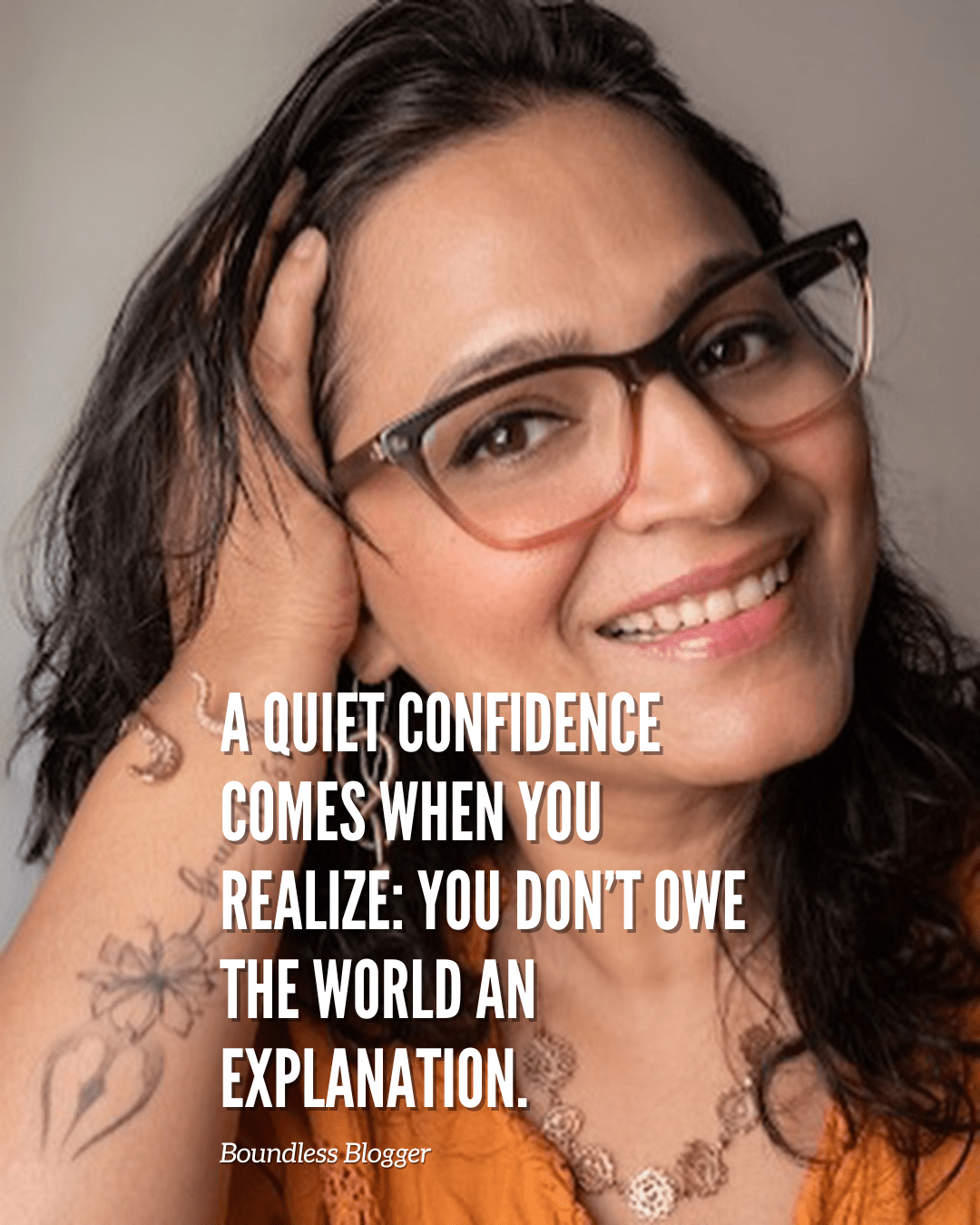
Stop proving yourself to everyone. At this stage of life, your experiences, wisdom, and choices already speak louder than explanations.
Introduction: The Quiet Exhaustion of Constantly Explaining Yourself
There comes a moment in life when you pause and ask yourself a simple but profound question:
“Why am I still trying to prove myself?”
You have lived enough years.
You have survived heartbreaks, failures, reinventions, and silent victories.
You have learned things that no textbook ever teaches.
Yet, somewhere along the way, many of us continue carrying the invisible burden. We find ourselves explaining our choices and defending our lifestyle. We also try proving our worth to people who never fully understand our journey.
At some point—especially in midlife—you begin to realize something powerful:
Your life already speaks for you.
The way you live says far more than words ever will. The values you carry say far more than words ever will. The resilience you have built says far more than words ever will. The peace you protect says far more than words ever will.
And the most liberating shift in adulthood is this:
You no longer feel the need to prove yourself to everyone.
Why We Feel the Need to Prove Ourselves
We often feel the need to prove ourselves to others. Before we learn to stop doing this, it helps to understand why we started doing it in the first place.
1. Conditioning From Early Life
From childhood, we are subtly trained to earn approval.
- Good grades earn praise.
- Obedience earns love.
- Achievements earn recognition.
Over time, this creates a belief system where self-worth becomes tied to external validation.
So even in adulthood, many people unconsciously continue seeking approval from:
- Family
- Colleagues
- Society
- Social media audiences
2. The Pressure of Social Comparison
In today’s digital world, comparison has become constant.
You see people announcing:
- Promotions
- Luxury vacations
- Perfect relationships
- Fitness transformations
This creates a subtle pressure to justify where you stand in life.
But the truth is simple.
Your life is not a performance review.
3. Fear of Judgment
Many people keep proving themselves because they fear criticism.
They worry about being labeled:
- Unsuccessful
- Different
- Unconventional
- “Not good enough”
But as you grow older, something interesting happens.
You realize judgment never stops, no matter what you do.
So the smarter choice becomes:
Stop living for the judges.
The Midlife Realization: Your Life Already Speaks
Somewhere between your late 30s and 50s, a deeper awareness begins to emerge.
You realize that life experience itself becomes credibility.
You no longer need to constantly explain:
- Why you chose a certain career
- Why your priorities changed
- Why you value peace over popularity
- Why your lifestyle looks different from others
Because your life story already holds the answers.
Your:
- resilience
- maturity
- emotional intelligence
- ability to adapt
are proofs that don’t require explanation.
Quiet growth often speaks the loudest.
Signs You Are Still Trying to Prove Yourself
Many people don’t even realize they are trapped in the cycle of validation.
Here are some subtle signs.
You Over-Explain Your Choices
You feel the need to justify things like:
- your job
- your parenting style
- your health decisions
- your lifestyle
Even when nobody asked.
You Feel Uncomfortable With Disapproval
A single critical comment can make you doubt yourself.
You replay conversations in your mind thinking:
“Maybe I should have said this differently.”
You Seek Approval Before Making Decisions
Instead of trusting your own intuition, you look for validation from others first.
You Measure Your Worth Through Achievements
Your sense of value rises or falls based on:
- titles
- recognition
- financial success
But true self-worth eventually becomes internal, not external.
What Happens When You Stop Proving Yourself
Learning to stop proving yourself to everyone can be deeply transformative.
It doesn’t mean arrogance.
It means self-alignment.
1. You Experience Emotional Freedom
When you stop explaining your life choices to everyone, something remarkable happens:
You gain mental clarity and peace.
You no longer waste energy managing perceptions.
2. Your Confidence Becomes Quiet and Authentic
Confidence shifts from loud validation to calm certainty.
You begin to think:
“I don’t need everyone to understand my path.”
3. Your Relationships Become Healthier
When you stop performing for approval, the people who truly value you naturally stay.
The rest slowly fade away.
And that is not loss.
That is alignment.
How to Stop Proving Yourself to Everyone
Breaking the habit of seeking validation takes awareness and practice.
Here are some powerful ways to begin.
1. Accept That Not Everyone Will Understand You
Different people live from different life perspectives.
Your experiences have shaped your thinking.
Someone’s experiences have shaped theirs.
Understanding this reduces the need to constantly explain yourself.
2. Let Your Actions Speak
The most powerful way to stop proving yourself to everyone is simple:
Live your values consistently.
Instead of explaining who you are, just be who you are.
People eventually recognize authenticity.
3. Set Boundaries Around Personal Decisions
Not every decision needs public discussion.
Some choices are deeply personal.
Examples include:
- lifestyle preferences
- health routines
- parenting approaches
- spiritual beliefs
You are allowed to keep parts of your life private and protected.
4. Trust Your Inner Compass
One of the most underrated forms of maturity is self-trust.
Your life experiences have already given you insight.
Trust the lessons you have earned.
5. Redefine Success on Your Own Terms
Success looks different at different stages of life.
For some people it means:
- financial independence
- inner peace
- meaningful relationships
- freedom of time
You get to define what success means for you.
Not society.
The Power of Quiet Self-Worth
There is something incredibly powerful about people who no longer feel the need to prove themselves.
They move through life with calm confidence.
They don’t argue unnecessarily.
They don’t chase validation.
They simply live authentically.
Their presence itself reflects:
- maturity
- self-respect
- clarity
This confidence cannot be manufactured.
It comes from years of living, learning, and evolving.
A Perspective Shift That Changes Everything
Instead of asking:
“How do I prove my worth?”
Ask a different question:
“Am I living in alignment with my values?”
That one shift changes everything.
Because once you start living in alignment:
- your peace increases
- your clarity improves
- your authenticity deepens
And slowly, the urge to prove yourself fades away.
FAQs
1. Why do I feel the need to prove myself to everyone?
This often comes from childhood conditioning, social comparison, and fear of judgment. Learning self-worth reduces the need for constant validation.
2. How can I stop seeking validation from others?
Practice self-awareness, set boundaries, trust your decisions, and focus on living according to your personal values instead of external approval.
3. Is it wrong to want validation?
No. Wanting appreciation is natural. The problem arises when self-worth becomes entirely dependent on other people’s opinions.
4. What age do people stop trying to prove themselves?
Many people experience this shift in their late 30s or 40s when life experience builds stronger self-awareness and inner confidence.
Conclusion: The Freedom of Living Unapologetically
There is a quiet freedom that arrives when you finally stop proving yourself to everyone.
You realize that your life, your resilience, and your experiences already tell your story.
You stop seeking approval.
You stop explaining your path.
And instead, you start living with a calm certainty that says:
“My life speaks for itself.”
That is not arrogance.
That is self-respect earned through experience.
Key Takeaway
The most powerful shift in adulthood is realizing you no longer need to prove yourself to everyone. Your life, values, and authenticity already speak louder than validation.
Related blog topics:
- Your Life Changes When Habits Become Rituals
- Feminism Beyond Careers: The Right to Slow Down
- Wabi-Sabi in Relationships: Embracing Imperfections
Discover more from Boundless Blogger
Subscribe to get the latest posts sent to your email.