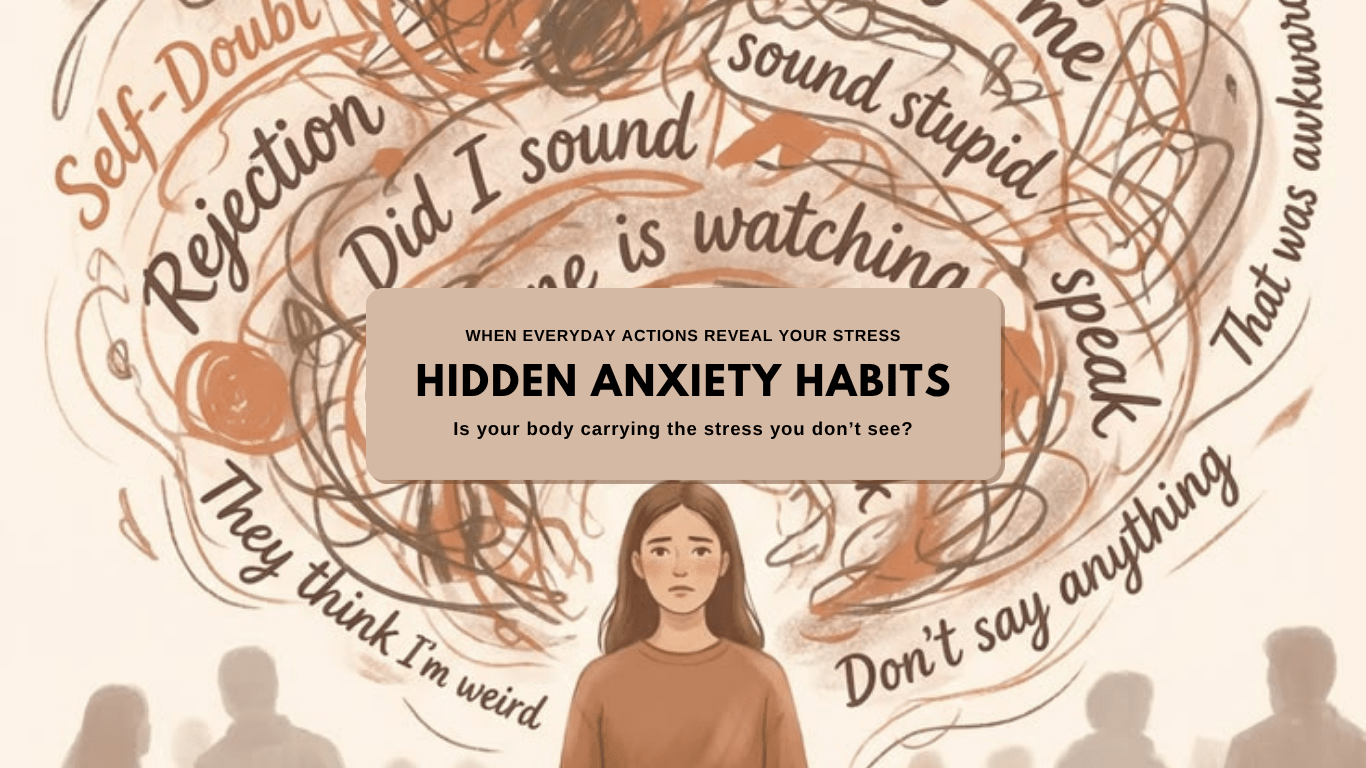
Hidden Anxiety Habits often disguise themselves as normal daily routines.
What feels familiar actually be your mind and body asking for relief.
We often imagine anxiety as something loud—racing heart, panic attacks, restlessness.
But the truth is, anxiety is often quiet. It blends into your routine so seamlessly that you start calling it “just how I am.”
That constant neck stiffness?
That tightness in your shoulders?
That urge to check your phone again?
They not just are habits. They are signals.
Hidden Anxiety Habits as Normal daily routines.
1. Constantly Checking Your Phone
You’re not bored—you’re seeking reassurance.
- Checking messages repeatedly
- Refreshing apps without purpose
- Feeling uneasy when the phone isn’t nearby
This habit stems from a need to stay in control or avoid missing something important.
Body impact:
Your neck bends forward repeatedly → leading to tech neck, stiffness, and tension headaches.
2. Jaw Clenching & Teeth Grinding
Many people don’t even realize they do this.
- Clenching while working
- Grinding teeth during sleep
- Tight jaw when stressed
Body impact:
Tension travels from jaw → neck → shoulders, creating chronic tightness in the nape area.
3. Overplanning Every Detail
Planning feels productive—but overplanning is often fear in disguise.
- Making multiple backup plans
- Needing certainty before starting
- Stress when things don’t go “as planned”
Body impact:
Your body stays in a constant “alert mode,” tightening muscles—especially in shoulders.
4. Replaying Conversations in Your Head
“Did I say something wrong?”
“I should have said that differently…”
This mental loop is a classic anxiety pattern.
Body impact:
The brain stays active → nervous system doesn’t relax → leading to muscle stiffness, especially around the neck.
5. Keeping Yourself Constantly Busy
Always doing something. Never pausing.
- Filling every gap in the day
- Feeling uncomfortable with stillness
- Productivity = self-worth
Body impact:
No rest = no muscle recovery → chronic tension builds up in upper back and shoulders.
6. Poor Posture Without Realizing It
Slouching isn’t just physical—it’s emotional too.
- Rounded shoulders
- Forward head posture
- Sitting stiffly for long hours
Body impact:
This directly compresses neck muscles and strains your upper spine.
7. Shallow Breathing
Anxiety often changes how you breathe.
- Quick, shallow breaths
- Holding breath unknowingly
- Chest breathing instead of belly breathing
Body impact:
Less oxygen → tighter muscles → especially in neck and shoulder region.
8. Trouble Saying “No”
People-pleasing is often anxiety wearing a polite mask.
- Saying yes when you want to say no
- Avoiding conflict at all costs
- Overcommitting
Body impact:
Emotional stress manifests physically—tight shoulders are a common result.
Why Anxiety Shows Up in Your Neck & Shoulders
Your body and mind are deeply connected.
When you feel anxious:
- Your nervous system goes into fight-or-flight mode
- Muscles tighten to “protect” you
- Shoulders rise, neck stiffens, jaw locks
Over time, this becomes your body’s default state.
How to Break the Cycle (Simple & Practical)
1. The 60-Second Reset
Every few hours:
- Drop your shoulders
- Roll your neck gently
- Take 5 slow breaths
This interrupts the stress loop.
2. Practice “Awareness Without Fixing”
Instead of reacting, just notice:
- “I’m clenching my jaw”
- “My shoulders are tight”
Awareness itself reduces tension.
3. Fix Your Posture Ritual
- Screen at eye level
- Sit back, not forward
- Relax shoulders consciously
Small corrections = big relief over time.
4. Breathe Like This (2 Minutes)
Try this:
- Inhale for 4
- Hold for 2
- Exhale for 6
This calms your nervous system instantly.
5. Create “Pause Pockets” in Your Day
Don’t fill every gap.
Sit. Do nothing. Just be.
This teaches your body that it’s safe to relax.
6. Release Physical Tension Daily
- Gentle stretching
- Shoulder rolls
- Warm showers
- Light massage
Your body needs an outlet.
7. Reduce Micro-Stressors
- Limit constant notifications
- Take breaks from screens
- Don’t overload your schedule
Anxiety thrives in overstimulation.
Final Thought
Not all anxiety screams.
Some of it whispers through your habits… and settles into your body.
The goal isn’t to fix everything overnight.
It’s to start noticing.
Because the moment you notice—
you begin to loosen what’s been held too tightly.
“Your body speaks what your mind tries to silence.” ~ Boundless Blogger
Related: Waking Up Already Exhausted? 5 Gentle Ways to Escape Quiet Burnout & Tired-But-Wired Mornings
Follow up for wellness articles Urban Wellness Life
Discover more from Boundless Blogger
Subscribe to get the latest posts sent to your email.